
Tax Season in the United States: A Strategic Moment for Tax Planning
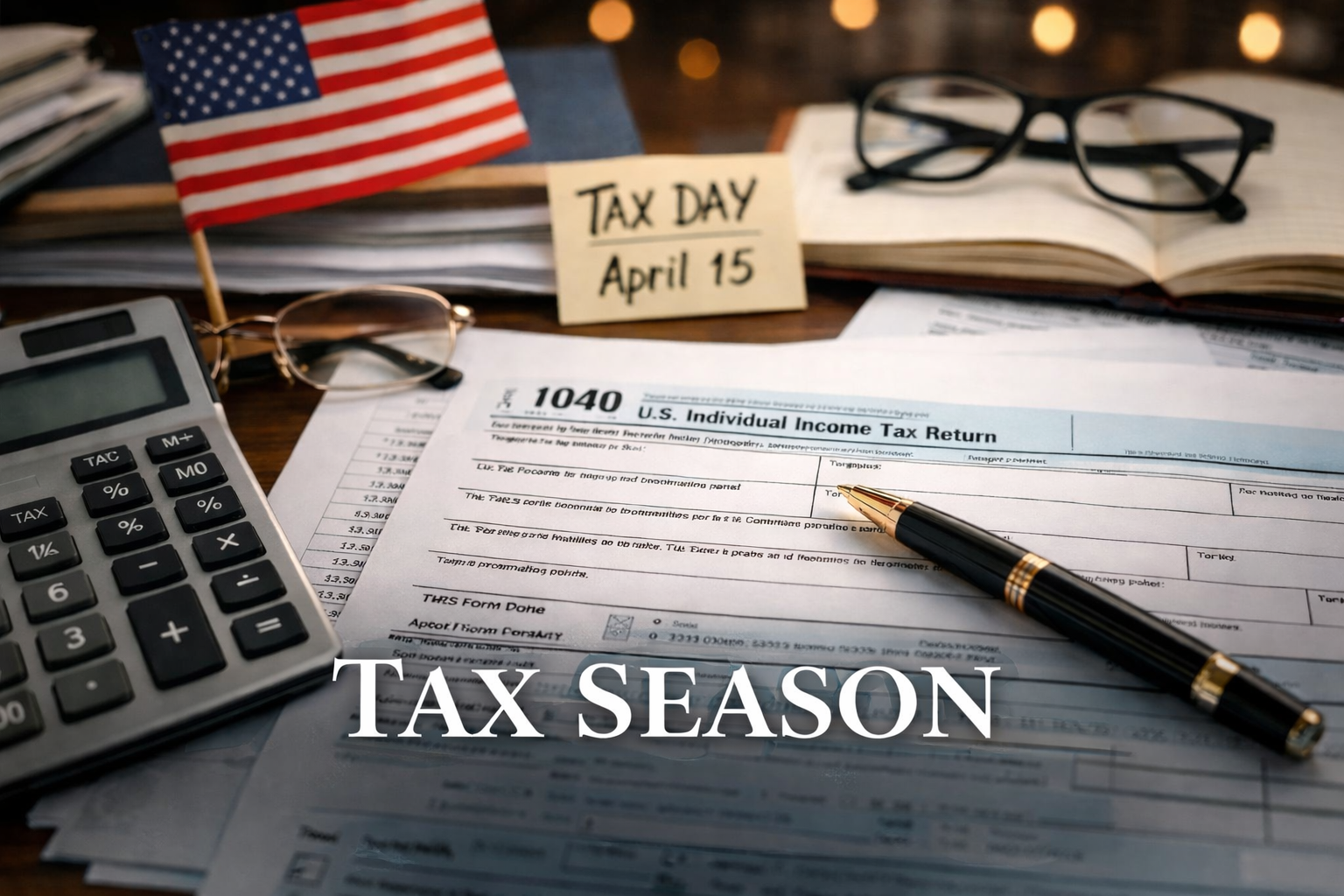
Within the U.S. tax system, Tax Season represents one of the most significant annual milestones for individual taxpayers, professionals, and businesses. More than a routine compliance requirement, it serves as a strategic opportunity to assess one’s tax position, evaluate optimization strategies, and ensure full compliance with Internal Revenue Service (IRS) regulations.
Approaching this period with a structured and informed strategy not only reduces exposure to penalties but also allows taxation to be integrated into broader financial and wealth planning.
The U.S. Tax Calendar and Its Operational Implications
Traditionally, Tax Season begins at the end of January, when the IRS starts accepting tax returns, and concludes with the standard filing deadline of April 15.
It is important to note that filing extensions apply only to the submission of the tax return, not to the payment of taxes owed. U.S. tax regulations impose interest and penalties on late payments, even when an extension has been formally granted.
Early preparation of tax filings allows for greater accuracy and significantly reduces potential risks.
The Taxpayer’s Responsibility in the U.S. Filing System
The U.S. tax system is strongly based on self-reporting, placing primary responsibility on taxpayers to accurately determine and disclose their taxable income.
Unlike in some other jurisdictions, filing a tax return is not merely a calculation of taxes owed. It also provides a comprehensive summary of a taxpayer’s financial position. Furthermore, tax returns often serve as essential documentation in lending, corporate, and wealth management contexts.
The Importance of Proper Tax Documentation
Effective management of Tax Season largely depends on the collection and organization of relevant tax documentation. Key records typically include:
Income statements issued by employers
Documentation relating to professional or self-employment income
Financial investment and account statements
Records of potentially deductible expenses or tax credits
Information related to real estate holdings or business ownership interests
A thorough preliminary review ensures both completeness and consistency of reported information.
Tax Planning and Optimization Opportunities
The U.S. tax system offers a wide range of planning tools that, when properly utilized, can significantly impact overall tax liability.
Among the most relevant are:
Tax credits designed for specific taxpayer categories
Deductions related to education, healthcare, and retirement contributions
Retirement planning instruments
Tax benefits associated with business and professional activities
Identifying and implementing these opportunities requires a tailored analysis and a comprehensive understanding of the taxpayer’s overall financial situation.
Risks Associated with Unstructured Tax Preparation
Professional experience shows that many tax issues arise from oversimplified approaches or delayed preparation of supporting documentation. The most common errors include:
Failure to report secondary sources of income
Incorrect application of deductions or tax credits
Inconsistencies in reported financial data
Failure to assess the tax implications of investments or asset transactions
Such issues may result in IRS audits, delayed refunds, or, in more complex cases, financial penalties.
The Value of Specialized Tax Advisory Services
In an increasingly complex tax environment, professional advisory support plays a crucial role in ensuring efficient tax management.
An advanced advisory approach allows taxpayers to:
Maintain full regulatory compliance
Identify strategic tax optimization opportunities
Align tax planning with broader financial and wealth objectives
Anticipate potential tax risks
Receive professional assistance in interactions with tax authorities
When managed strategically, taxation becomes a key tool for wealth preservation and enhancement.
Tax Season as a Strategic Financial Review
For both individuals and businesses, the annual tax return represents a valuable opportunity to evaluate financial performance and define mid- to long-term tax strategies.
An integrated view of taxation transforms a mandatory compliance process into a forward-looking planning exercise focused on stability and growth.
Conclusion
Within the U.S. fiscal landscape, Tax Season represents a critical period requiring technical expertise, regulatory awareness, and strategic insight. Addressing it with a structured approach and the support of experienced advisors helps mitigate operational risks and uncover opportunities that may not be immediately apparent.
Today, structured tax management is an essential component of protecting and growing both personal and business wealth.